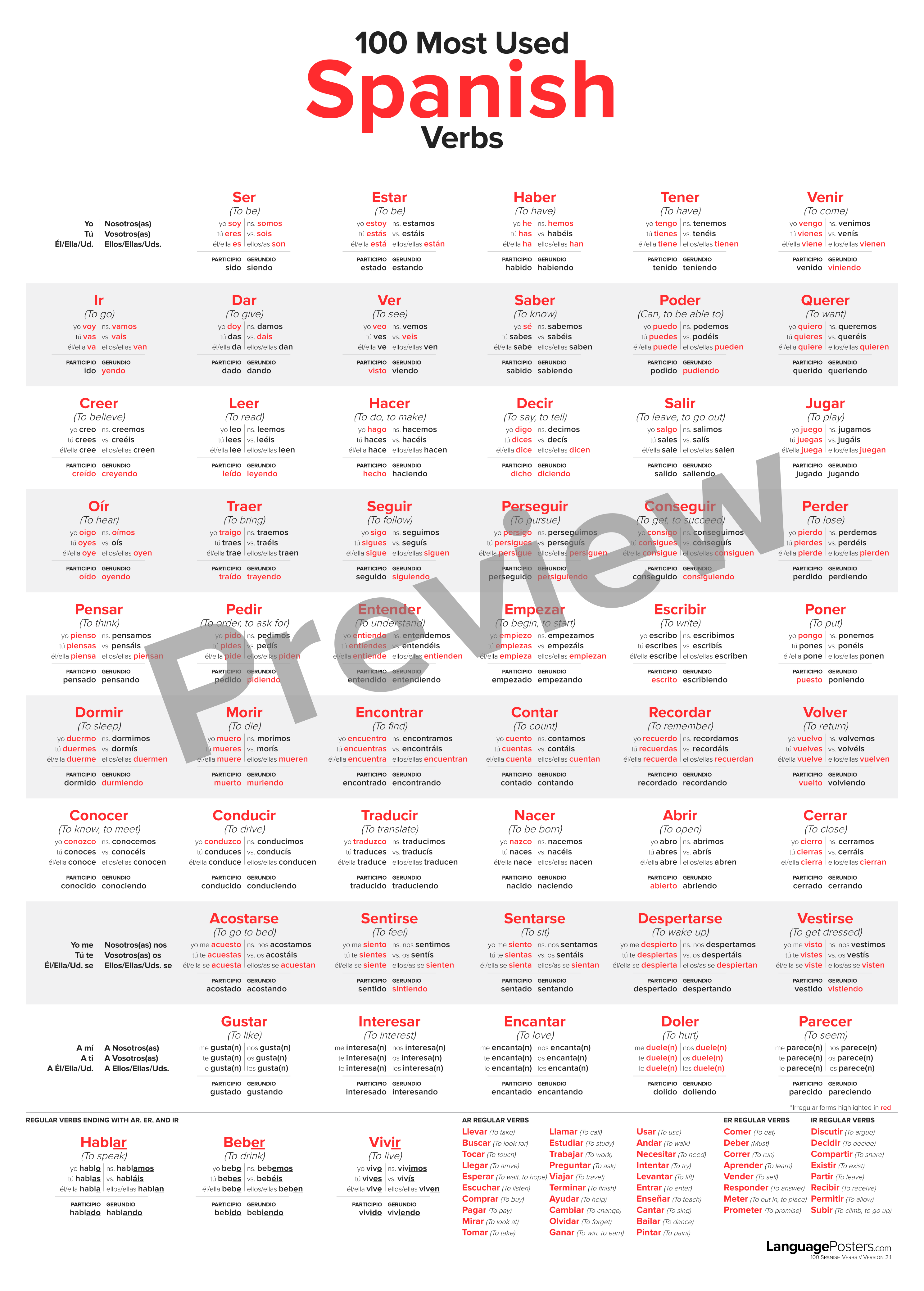

Learning a new language can be both exciting and challenging, especially when it comes to mastering Spanish Irregular Verbs. These verbs do not follow the standard conjugation patterns, making them a bit tricky to memorize. However, with the right strategies and practice, you can conquer these irregularities and speak Spanish with confidence.
Understanding Spanish Irregular Verbs
Spanish irregular verbs are those that do not follow the regular conjugation patterns. These verbs often have unique forms in the present tense, preterite tense, and other tenses. Understanding the patterns and exceptions can significantly improve your fluency and accuracy in Spanish.
Common Spanish Irregular Verbs
Some of the most common Spanish irregular verbs include:
- Ser (to be)
- Ir (to go)
- Tener (to have)
- Hacer (to do/make)
- Decir (to say)
- Ver (to see)
- Poder (to be able to)
- Querer (to want)
- Saber (to know)
- Estar (to be)
These verbs are frequently used in everyday conversation, so mastering them is essential for effective communication.
Conjugation Patterns of Spanish Irregular Verbs
Irregular verbs in Spanish often have unique conjugation patterns that differ from regular verbs. Let's look at some of the most common patterns:
Ser and Ir
Both ser and ir are irregular verbs that share similar conjugation patterns in the present tense. Here are their conjugations:
| Pronoun | Ser | Ir |
|---|---|---|
| Yo | soy | voy |
| Tú | eres | vas |
| Él/Ella/Usted | es | va |
| Nosotros/Nosotras | somos | vamos |
| Vosotros/Vosotras | sois | vais |
| Ellos/Ellas/Ustedes | son | van |
Notice how the forms for ser and ir differ from the regular verb patterns.
Tener and Hacer
Tener and hacer are also common irregular verbs. Here are their present tense conjugations:
| Pronoun | Tener | Hacer |
|---|---|---|
| Yo | tengo | hago |
| Tú | tienes | haces |
| Él/Ella/Usted | tiene | hace |
| Nosotros/Nosotras | tenemos | hacemos |
| Vosotros/Vosotras | tenéis | hacéis |
| Ellos/Ellas/Ustedes | tienen | hacen |
These verbs have unique stems that change in the present tense.
Decir and Ver
Decir and ver are irregular in the present tense and have unique forms for each pronoun. Here are their conjugations:
| Pronoun | Decir | Ver |
|---|---|---|
| Yo | digo | veo |
| Tú | dices | ves |
| Él/Ella/Usted | dice | ve |
| Nosotros/Nosotras | decimos | vemos |
| Vosotros/Vosotras | decís | veis |
| Ellos/Ellas/Ustedes | dicen | ven |
These verbs have irregular stems that change in the present tense.
Poder, Querer, and Saber
Poder, querer, and saber are irregular verbs that share similar patterns. Here are their present tense conjugations:
| Pronoun | Poder | Querer | Saber |
|---|---|---|---|
| Yo | puedo | quiero | sé |
| Tú | puedes | quieres | sabes |
| Él/Ella/Usted | puede | quiere | sabe |
| Nosotros/Nosotras | podemos | queremos | sabemos |
| Vosotros/Vosotras | podéis | queréis | sabéis |
| Ellos/Ellas/Ustedes | pueden | quieren | saben |
These verbs have unique stems that change in the present tense.
Estar
Estar is another common irregular verb. Here are its present tense conjugations:
| Pronoun | Estar |
|---|---|
| Yo | estoy |
| Tú | estás |
| Él/Ella/Usted | está |
| Nosotros/Nosotras | estamos |
| Vosotros/Vosotras | estáis |
| Ellos/Ellas/Ustedes | están |
Estar is often used to describe temporary states or locations.
📝 Note: Memorizing these conjugation patterns can be challenging, but with practice and repetition, you can become more comfortable with them.
Strategies for Mastering Spanish Irregular Verbs
Mastering Spanish Irregular Verbs requires a combination of memorization, practice, and understanding. Here are some effective strategies to help you conquer these verbs:
1. Memorize Common Irregular Verbs
Start by memorizing the most common irregular verbs. Focus on their present tense forms and gradually move on to other tenses. Use flashcards or apps like Anki to help with memorization.
2. Practice Regularly
Consistent practice is key to mastering irregular verbs. Incorporate them into your daily conversations, writing exercises, and language learning routines. The more you use them, the more natural they will become.
3. Use Context Clues
When encountering new irregular verbs, try to use context clues to understand their meanings and forms. This can help you remember them more easily and apply them correctly in sentences.
4. Learn Verb Families
Many irregular verbs belong to families that share similar patterns. For example, verbs like decir, hacer, and traer have similar irregular forms in the preterite tense. Learning these families can help you remember multiple verbs more efficiently.
5. Use Mnemonics and Visual Aids
Create mnemonics or visual aids to help you remember irregular verb forms. For example, you can draw a picture or create a story that associates the verb with its irregular form.
6. Engage in Conversations
Practice speaking with native speakers or language exchange partners. Engaging in conversations will help you use irregular verbs in context and receive immediate feedback on your usage.
📝 Note: Don't be discouraged if you make mistakes. Learning Spanish Irregular Verbs takes time and practice, so be patient with yourself.
Common Mistakes to Avoid
When learning Spanish Irregular Verbs, it's easy to make mistakes. Here are some common errors to avoid:
- Confusing Ser and Estar: Both verbs mean "to be," but they are used in different contexts. Ser is used for permanent characteristics, while estar is used for temporary states or locations.
- Incorrect Preterite Forms: Many irregular verbs have unique forms in the preterite tense. Make sure to memorize these forms to avoid mistakes.
- Overgeneralizing Patterns: Some verbs may seem to follow a pattern but have unique forms. Always double-check the conjugation to ensure accuracy.
- Ignoring Context: The meaning of a verb can change based on the context. Pay attention to the context to use the correct form.
By being aware of these common mistakes, you can improve your accuracy and fluency in Spanish.
📝 Note: Regularly review and practice irregular verbs to reinforce your memory and avoid making these mistakes.
Resources for Learning Spanish Irregular Verbs
There are numerous resources available to help you learn Spanish Irregular Verbs. Here are some useful tools and materials:
- Textbooks and Workbooks: Many Spanish language textbooks and workbooks include sections dedicated to irregular verbs. These resources often provide exercises and practice activities.
- Online Courses and Apps: Platforms like Duolingo, Babbel, and Rosetta Stone offer interactive lessons and exercises that focus on irregular verbs.
- Flashcard Apps: Apps like Anki, Quizlet, and Memrise allow you to create custom flashcards for irregular verbs and practice them regularly.
- Language Exchange Partners: Practicing with native speakers or language exchange partners can provide valuable feedback and help you improve your usage of irregular verbs.
- YouTube Channels and Videos: Many language learning channels on YouTube offer tutorials and explanations of Spanish Irregular Verbs. These videos can be a great visual aid for learning.
Utilizing these resources can enhance your learning experience and help you master irregular verbs more effectively.
📝 Note: Combine different resources to create a well-rounded learning approach that suits your needs.
Conclusion
Learning Spanish Irregular Verbs is a crucial step in mastering the Spanish language. By understanding the common patterns, practicing regularly, and using effective strategies, you can overcome the challenges posed by these verbs. Remember to be patient with yourself and seek out resources that can support your learning journey. With dedication and practice, you will become more confident and fluent in Spanish.
Related Terms:
- irregular verbs vs regular spanish
- spanish irregular verbs quiz
- spanish irregular verbs worksheet pdf
- spanish ir verbs
- spanish irregular verbs preterite
- spanish verb conjugation chart pdf