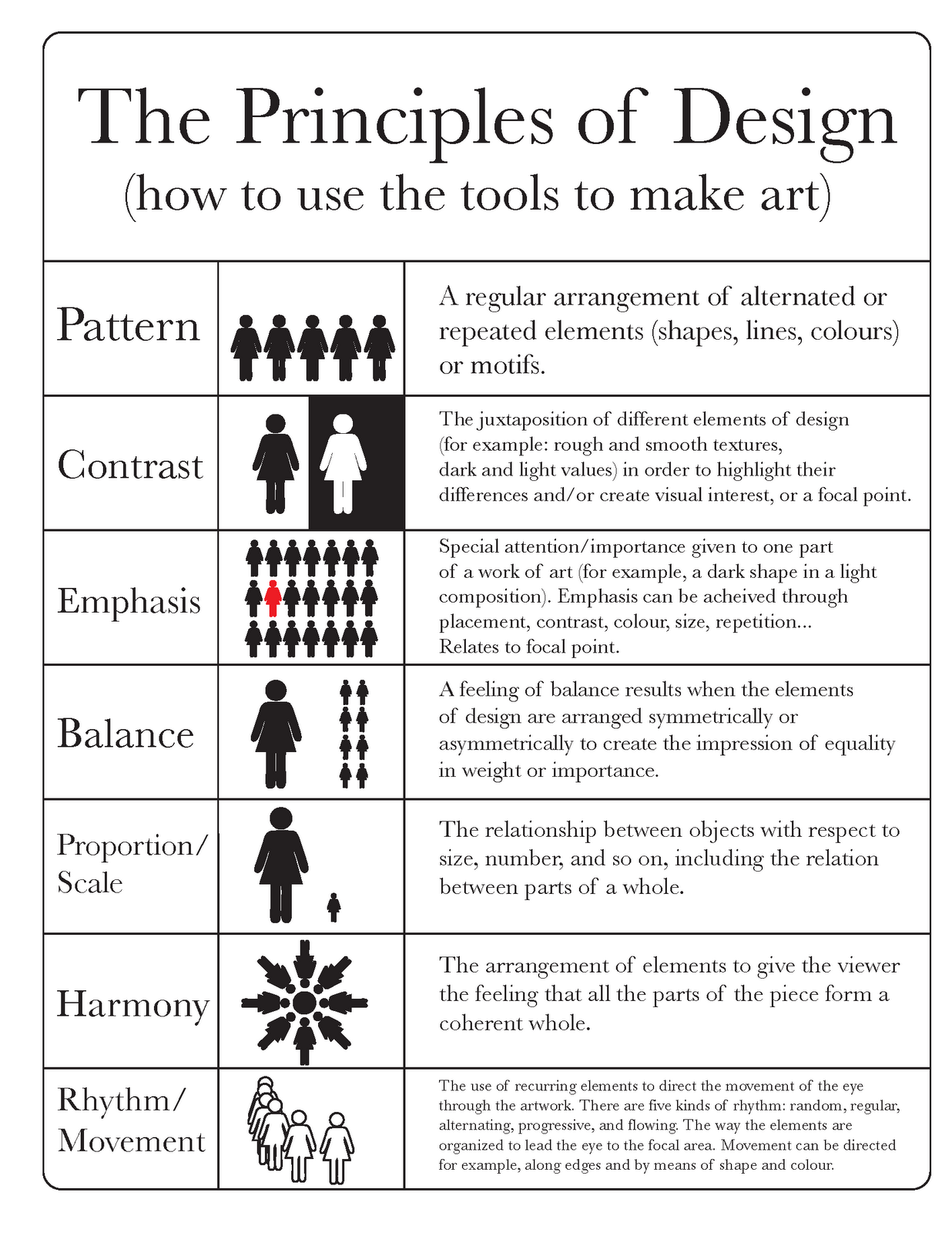

Art is a universal language that transcends cultural and linguistic barriers, offering a rich tapestry of expression and emotion. Whether through painting, sculpture, music, or literature, the Principles of Art serve as the foundation upon which all artistic endeavors are built. Understanding these principles can enhance appreciation and creation, making art more accessible and meaningful.
Understanding the Principles of Art
The Principles of Art are the guidelines that artists use to organize the visual elements of their work. These principles help create harmony, balance, and unity in a piece, making it visually appealing and emotionally resonant. The key principles include balance, proportion, emphasis, movement, variety, and unity.
Balance
Balance in art refers to the distribution of visual weight in a composition. It creates a sense of equilibrium and stability. There are three main types of balance:
- Symmetrical Balance: This type of balance is achieved when both sides of a composition are mirror images of each other. It creates a formal and structured feel.
- Asymmetrical Balance: This occurs when the elements on either side of the composition are different but still create a sense of equilibrium. It often feels more dynamic and interesting.
- Radial Balance: In this type, elements radiate from a central point, creating a sense of movement and energy.
Balance is crucial because it helps to create a sense of order and harmony in a piece of art. Without balance, a composition can feel chaotic and unorganized.
Proportion
Proportion refers to the relationship between the sizes of different elements in a composition. It helps to create a sense of scale and perspective. Artists use proportion to guide the viewer's eye and create a sense of depth and space.
Proportion is often used to create a sense of realism in art. For example, in a portrait, the proportions of the face and body must be accurate to create a lifelike image. However, artists can also manipulate proportion to create a sense of distortion or exaggeration, adding a unique and expressive element to their work.
Emphasis
Emphasis is the principle that draws the viewer's attention to a specific part of the composition. It creates a focal point and guides the viewer's eye through the piece. Emphasis can be achieved through various means, such as:
- Using contrasting colors or values
- Placing an element in a prominent position
- Using a unique shape or form
- Adding texture or pattern
Emphasis is important because it helps to create a sense of hierarchy in a composition. It guides the viewer's eye and creates a clear focal point, making the piece more engaging and interesting.
Movement
Movement in art refers to the visual flow and direction created by the arrangement of elements. It guides the viewer's eye through the composition and creates a sense of energy and dynamism. Movement can be achieved through:
- Using lines and shapes that suggest motion
- Creating a sense of depth and space
- Using contrasting colors or values
- Adding texture or pattern
Movement is crucial because it helps to create a sense of life and energy in a piece of art. Without movement, a composition can feel static and uninteresting.
Variety
Variety refers to the use of different elements and principles to create interest and contrast in a composition. It prevents monotony and keeps the viewer engaged. Variety can be achieved through:
- Using a range of colors and values
- Incorporating different shapes and forms
- Adding texture and pattern
- Varying the size and scale of elements
Variety is important because it adds depth and complexity to a piece of art. It creates visual interest and keeps the viewer's attention.
Unity
Unity is the principle that brings all the elements and principles of art together to create a cohesive and harmonious composition. It ensures that the piece feels complete and balanced. Unity can be achieved through:
- Using a consistent color scheme
- Repeating shapes and forms
- Creating a sense of balance and proportion
- Using movement to guide the viewer's eye
Unity is crucial because it creates a sense of wholeness and completeness in a piece of art. Without unity, a composition can feel disjointed and chaotic.
Applying the Principles of Art
Understanding the Principles of Art is one thing, but applying them effectively is another. Here are some practical steps to help you incorporate these principles into your artistic practice:
Analyze Existing Artwork
One of the best ways to learn about the Principles of Art is to analyze existing artwork. Look at how different artists use balance, proportion, emphasis, movement, variety, and unity in their compositions. Try to identify the focal points, the use of color and value, and the overall structure of the piece.
📝 Note: Analyzing artwork can be done in museums, galleries, or even online. Take notes and sketch out the compositions to deepen your understanding.
Experiment with Different Techniques
Experimenting with different techniques is a great way to explore the Principles of Art. Try using different mediums, such as paint, charcoal, or digital tools, to see how they affect your composition. Play with color, value, and texture to create different effects and moods.
📝 Note: Don't be afraid to make mistakes. Experimentation is all about learning and discovering new possibilities.
Practice Regularly
Like any skill, applying the Principles of Art requires practice. Set aside time each day to work on your art, whether it's sketching, painting, or sculpting. The more you practice, the more comfortable you'll become with these principles and the more naturally they'll come to you.
📝 Note: Consistency is key. Even a few minutes of practice each day can make a big difference over time.
Seek Feedback
Feedback from others can provide valuable insights into your use of the Principles of Art. Share your work with friends, family, or fellow artists and ask for their opinions. Consider joining an art group or taking a class to get more structured feedback and guidance.
📝 Note: Be open to constructive criticism. It's an opportunity to learn and improve.
The Role of the Principles of Art in Different Mediums
The Principles of Art are universal and can be applied to various mediums, including painting, sculpture, photography, and digital art. However, each medium has its unique characteristics and challenges. Here's how the principles can be applied in different mediums:
Painting
In painting, the Principles of Art are used to create depth, texture, and emotion. Artists use color, value, and brushwork to achieve balance, proportion, emphasis, movement, variety, and unity. For example, a painter might use contrasting colors to create emphasis or varying brush strokes to add texture and movement.
Sculpture
In sculpture, the principles are used to create form, space, and balance. Sculptors use materials like clay, stone, or metal to shape their pieces, focusing on proportion, emphasis, and movement. For instance, a sculptor might use a central focal point to create emphasis or varying sizes and shapes to add variety.
Photography
In photography, the principles are used to compose and frame the subject. Photographers use light, shadow, and composition to create balance, proportion, emphasis, movement, variety, and unity. For example, a photographer might use the rule of thirds to create emphasis or leading lines to guide the viewer's eye.
Digital Art
In digital art, the principles are used to create virtual compositions. Digital artists use software tools to manipulate color, value, and texture, focusing on balance, proportion, emphasis, movement, variety, and unity. For instance, a digital artist might use layers and filters to add depth and texture or use contrasting colors to create emphasis.
The Evolution of the Principles of Art
The Principles of Art have evolved over time, reflecting changes in artistic styles and movements. From the classical art of ancient Greece and Rome to the modern and contemporary art of today, the principles have been adapted and reinterpreted to suit different aesthetic and cultural contexts.
For example, during the Renaissance, artists like Leonardo da Vinci and Michelangelo emphasized realism and proportion, using the principles to create lifelike and anatomically accurate figures. In contrast, during the Impressionist movement, artists like Claude Monet and Pierre-Auguste Renoir focused on capturing the fleeting effects of light and color, using the principles to create a sense of movement and atmosphere.
In the 20th century, artists like Pablo Picasso and Jackson Pollock experimented with abstraction and expressionism, using the principles to create new and innovative forms of art. Today, artists continue to push the boundaries of the principles, exploring new mediums and techniques to create unique and meaningful works.
The Impact of the Principles of Art on Society
The Principles of Art have a profound impact on society, influencing everything from architecture and design to fashion and advertising. Understanding these principles can help us appreciate the beauty and complexity of the world around us, as well as the creative processes that shape it.
For example, in architecture, the principles are used to design buildings that are both functional and aesthetically pleasing. Architects use balance, proportion, and emphasis to create structures that are harmonious and visually appealing. In fashion, designers use color, texture, and movement to create clothing that is both stylish and expressive.
In advertising, the principles are used to create compelling and effective visuals. Advertisers use emphasis, movement, and variety to grab the viewer's attention and convey a message. In all these fields, the principles of art play a crucial role in shaping our visual culture and enhancing our appreciation of beauty and creativity.
Here is a table summarizing the key principles of art and their applications:
| Principle | Description | Application |
|---|---|---|
| Balance | The distribution of visual weight in a composition. | Creating harmony and stability. |
| Proportion | The relationship between the sizes of different elements. | Creating a sense of scale and perspective. |
| Emphasis | The focal point that draws the viewer's attention. | Guiding the viewer's eye and creating hierarchy. |
| Movement | The visual flow and direction created by the arrangement of elements. | Creating energy and dynamism. |
| Variety | The use of different elements to create interest and contrast. | Adding depth and complexity. |
| Unity | The principle that brings all elements together to create a cohesive composition. | Creating a sense of wholeness and completeness. |
In conclusion, the Principles of Art are the backbone of artistic expression, guiding artists in creating visually appealing and emotionally resonant works. Whether through painting, sculpture, photography, or digital art, these principles help to create balance, proportion, emphasis, movement, variety, and unity. Understanding and applying these principles can enhance both the creation and appreciation of art, making it a richer and more meaningful experience for everyone.
Related Terms:
- principles of art harmony
- principles of art list
- principles of visual art
- principles of art unity
- principles of art movement
- 10 basic principles of art