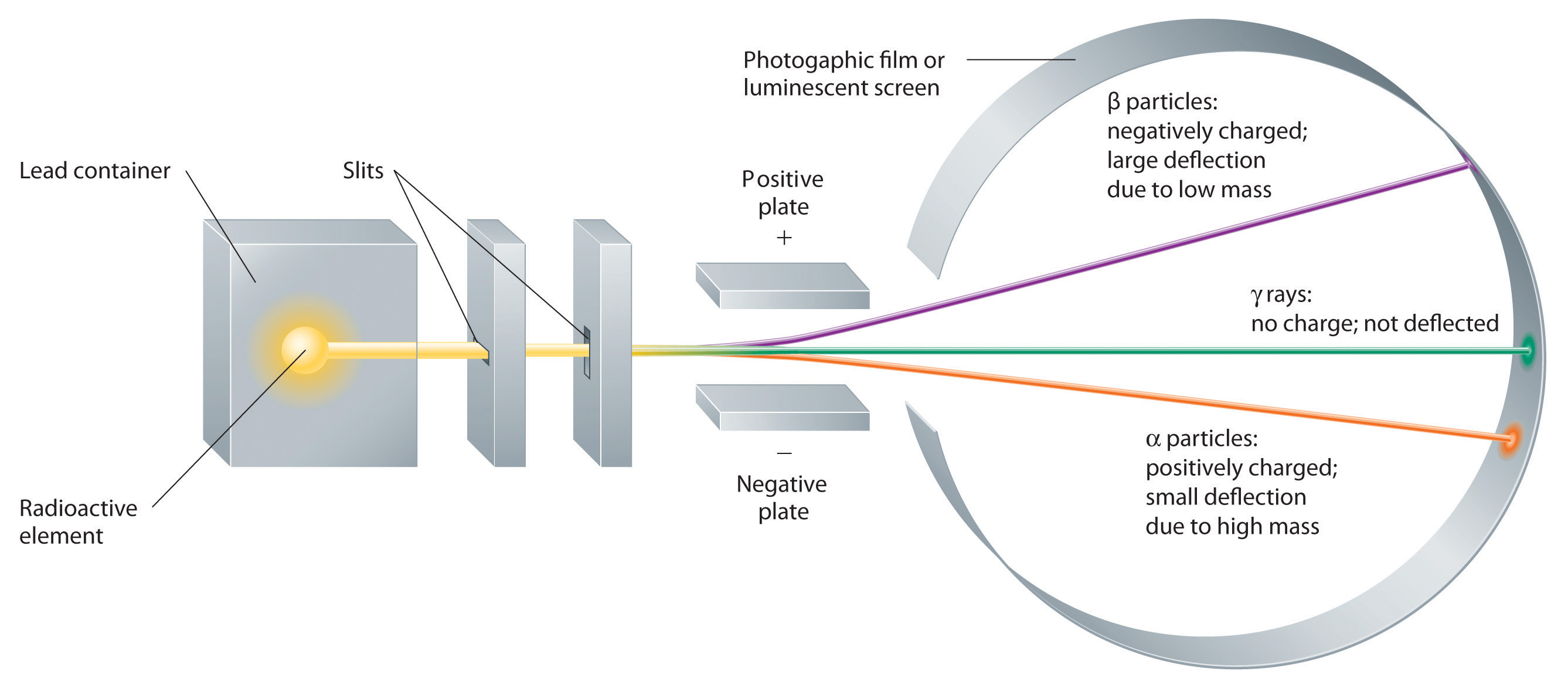

In the vast and intricate world of physics, the study of negatively charged particles has always been a cornerstone of understanding the fundamental nature of matter and energy. These particles, primarily electrons, play a crucial role in various phenomena, from the behavior of atoms to the functioning of electronic devices. This exploration delves into the properties, behaviors, and applications of negatively charged particles, providing a comprehensive overview for both enthusiasts and professionals in the field.
Understanding Negatively Charged Particles
Negatively charged particles are subatomic particles that carry a negative electric charge. The most well-known and studied negatively charged particle is the electron. Electrons are fundamental to the structure of atoms, orbiting the nucleus and determining the chemical properties of elements. Other negatively charged particles include muons and tauons, which are heavier counterparts of the electron but are less stable and more rare.
Properties of Electrons
Electrons are incredibly small, with a mass approximately 1/1836 that of a proton. Despite their tiny size, electrons have a significant impact on the behavior of matter. Key properties of electrons include:
- Charge: Electrons carry a charge of -1.6 × 10^-19 coulombs.
- Spin: Electrons have a spin of 1/2, which contributes to their magnetic properties.
- Wave-Particle Duality: Electrons exhibit both wave-like and particle-like properties, as described by quantum mechanics.
These properties make electrons essential in various scientific and technological applications.
Behavior of Negatively Charged Particles
The behavior of negatively charged particles is governed by the laws of electromagnetism and quantum mechanics. Electrons, for instance, can be found in different energy levels within an atom, and their transitions between these levels result in the emission or absorption of photons. This behavior is fundamental to the functioning of lasers and other optical devices.
In addition to their role in atomic structure, electrons are also crucial in the conduction of electricity. In metals, electrons are free to move through the material, allowing for the flow of electric current. This property is exploited in various electronic devices, from simple circuits to complex microprocessors.
Applications of Negatively Charged Particles
The applications of negatively charged particles are vast and varied, spanning multiple fields of science and technology. Some of the most significant applications include:
- Electronics: Electrons are the primary charge carriers in electronic devices, enabling the functioning of transistors, diodes, and integrated circuits.
- Optics: The behavior of electrons in atoms and molecules is crucial for the development of lasers and other optical devices.
- Medical Imaging: Techniques such as electron microscopy and positron emission tomography (PET) rely on the properties of negatively charged particles to produce high-resolution images of biological tissues.
- Particle Accelerators: In high-energy physics, negatively charged particles are accelerated to near the speed of light to study the fundamental forces and particles of the universe.
These applications highlight the versatility and importance of negatively charged particles in modern science and technology.
Electron Microscopy
Electron microscopy is a powerful tool that utilizes the wave-like properties of electrons to produce high-resolution images of microscopic structures. Unlike optical microscopes, which are limited by the wavelength of visible light, electron microscopes can achieve much higher magnification and resolution. There are two main types of electron microscopes:
- Transmission Electron Microscope (TEM): In a TEM, a beam of electrons is transmitted through a thin specimen, and the resulting image is formed by the interaction of the electrons with the sample.
- Scanning Electron Microscope (SEM): In an SEM, a focused beam of electrons scans the surface of a specimen, and the secondary electrons emitted from the surface are detected to form an image.
Electron microscopy has revolutionized fields such as materials science, biology, and nanotechnology by providing detailed insights into the structure and composition of materials at the nanoscale.
Particle Accelerators
Particle accelerators are large-scale devices used to accelerate negatively charged particles, such as electrons, to high energies. These accelerators are essential tools in high-energy physics, enabling scientists to study the fundamental forces and particles that make up the universe. Some of the most famous particle accelerators include the Large Hadron Collider (LHC) at CERN and the Stanford Linear Accelerator Center (SLAC).
In a particle accelerator, electrons are accelerated to near the speed of light using electromagnetic fields. These high-energy electrons can then be used to probe the structure of matter at the subatomic level, revealing insights into the behavior of quarks, gluons, and other fundamental particles.
Electron Beam Lithography
Electron beam lithography is a technique used in the fabrication of nanoscale structures, such as integrated circuits and microelectromechanical systems (MEMS). In this process, a focused beam of electrons is used to pattern a resist material, which is then developed to create the desired nanostructures. Electron beam lithography offers several advantages over traditional optical lithography, including:
- High Resolution: Electron beam lithography can achieve resolutions down to a few nanometers, making it ideal for the fabrication of nanoscale devices.
- Flexibility: The technique can be used to create complex patterns with high precision, allowing for the fabrication of custom-designed nanostructures.
- Direct Writing: Electron beam lithography enables direct writing of patterns onto the resist material, eliminating the need for masks and reducing the complexity of the fabrication process.
Electron beam lithography has become an essential tool in the development of advanced electronic devices and nanotechnology applications.
Challenges and Future Directions
While the study and application of negatively charged particles have led to significant advancements in science and technology, there are still many challenges and opportunities for future research. Some of the key challenges include:
- High-Energy Physics: Understanding the behavior of negatively charged particles at extremely high energies remains a major challenge, requiring the development of more powerful particle accelerators and detectors.
- Nanotechnology: The precise control and manipulation of negatively charged particles at the nanoscale are essential for the development of advanced materials and devices.
- Medical Applications: The use of negatively charged particles in medical imaging and therapy holds great promise, but further research is needed to optimize these techniques and minimize their side effects.
Future directions in the study of negatively charged particles will likely focus on addressing these challenges and exploring new applications in fields such as quantum computing, energy storage, and environmental science.
🔍 Note: The study of negatively charged particles is a dynamic and evolving field, with new discoveries and applications continually emerging. Staying informed about the latest developments is essential for researchers and professionals in this area.
In summary, the study of negatively charged particles, particularly electrons, has revolutionized our understanding of the natural world and enabled the development of numerous technologies that have transformed modern society. From the fundamental properties of atoms to the complex behavior of electronic devices, negatively charged particles play a crucial role in shaping the future of science and technology. As our knowledge and capabilities continue to advance, the potential applications of these particles will only grow, paving the way for new discoveries and innovations.
Related Terms:
- what are negative charges called
- negative charged particle crossword
- are all electrons negatively charged
- why electrons are negatively charged
- what makes an electron negative
- what makes electrons negatively charged