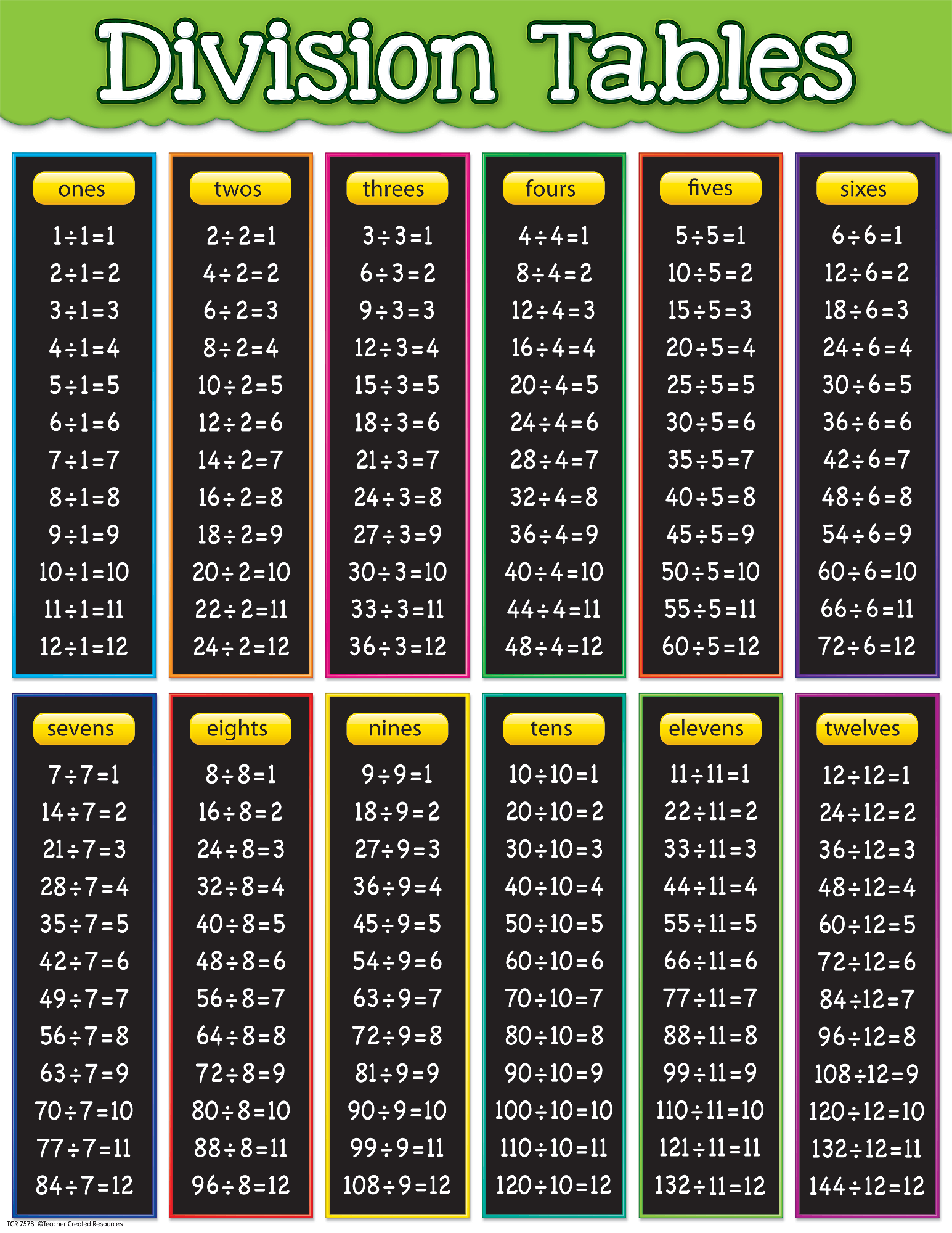

Mastering division math facts is a crucial skill for students, as it forms the foundation for more advanced mathematical concepts. Understanding division is not just about memorizing facts; it's about grasping the underlying principles that make division a powerful tool in mathematics. This post will delve into the importance of division math facts, strategies for learning them, and practical applications in everyday life.
Understanding Division Math Facts
Division is one of the four basic operations in arithmetic, alongside addition, subtraction, and multiplication. It involves splitting a number into equal parts. For example, dividing 12 by 3 means splitting 12 into three equal groups, each containing 4. This fundamental concept is essential for solving more complex problems in mathematics and real-life situations.
Division math facts refer to the basic division problems that students need to memorize, such as 12 ÷ 3 = 4, 20 ÷ 4 = 5, and so on. These facts are the building blocks for more advanced mathematical skills, including fractions, decimals, and algebra. Mastering these facts allows students to solve problems more quickly and accurately, which is crucial for academic success.
Why Division Math Facts Matter
Understanding and memorizing division math facts is essential for several reasons:
- Foundation for Advanced Math: Division is a key component in many advanced mathematical concepts. For example, understanding division is crucial for working with fractions, ratios, and percentages.
- Problem-Solving Skills: Knowing division facts helps students solve problems more efficiently. Whether it's dividing a pizza among friends or calculating the cost per item, division is a practical skill.
- Confidence Building: Mastering division math facts boosts students' confidence in their mathematical abilities. This confidence can motivate them to tackle more challenging problems.
- Everyday Applications: Division is used in everyday life, from splitting a bill at a restaurant to measuring ingredients in a recipe. Understanding division makes these tasks easier and more accurate.
Strategies for Learning Division Math Facts
Learning division math facts can be challenging, but with the right strategies, students can master them effectively. Here are some proven methods:
Flashcards
Flashcards are a classic and effective tool for memorizing division math facts. They allow students to practice division problems repeatedly, reinforcing their memory. Here’s how to use them:
- Create Flashcards: Write division problems on one side of the card and the answers on the other. For example, write "12 ÷ 3" on one side and "4" on the other.
- Practice Regularly: Spend a few minutes each day practicing with flashcards. This consistent practice helps reinforce memory.
- Mix and Match: Shuffle the flashcards to ensure that students don't memorize the order of the problems. This makes the practice more effective.
📝 Note: Use colorful flashcards to make the learning process more engaging and fun.
Division Games
Games make learning division math facts more enjoyable. Here are a few game ideas:
- Division Bingo: Create bingo cards with division problems. Call out the answers, and students cover the corresponding problems on their cards. The first to get a line (horizontally, vertically, or diagonally) shouts "Bingo!"
- Division War: Use a deck of cards to play a game similar to the card game War. Each player flips two cards and divides the larger number by the smaller one. The player with the highest quotient wins the round.
- Division Race: Divide students into teams and give each team a set of division problems. The first team to solve all the problems correctly wins.
📝 Note: Adapt the difficulty level of the games to match the students' abilities.
Division Worksheets
Worksheets are another effective tool for practicing division math facts. They provide structured practice and can be used in the classroom or at home. Here’s how to use them:
- Choose Appropriate Worksheets: Select worksheets that match the students' current level of understanding. Start with simple problems and gradually increase the difficulty.
- Practice Regularly: Encourage students to complete a worksheet each day. This consistent practice helps reinforce memory.
- Review and Correct: After completing a worksheet, review the answers with the students. Correct any mistakes and explain the correct solutions.
📝 Note: Use worksheets that include a variety of problem types to keep the practice interesting.
Division Apps and Online Tools
Technology offers numerous resources for learning division math facts. Here are a few options:
- Interactive Apps: Apps like Prodigy, Khan Academy, and Mathway offer interactive division practice. They provide instant feedback and adaptive learning paths.
- Online Games: Websites like Coolmath4Kids and Math Game Time offer division games that make learning fun. These games often include colorful graphics and engaging challenges.
- Virtual Flashcards: Online tools like Quizlet and Anki allow students to create and practice with virtual flashcards. These tools offer features like spaced repetition to enhance memory retention.
📝 Note: Ensure that the apps and tools are age-appropriate and align with the students' learning goals.
Division Songs and Rhymes
Songs and rhymes are a fun way to learn division math facts. They help students remember the facts through catchy tunes and repetitive lyrics. Here are a few ideas:
- Create Division Songs: Write simple songs with division problems and their answers. For example, "Twelve divided by three, equals four, that's what we see."
- Use Existing Rhymes: Adapt existing rhymes to include division facts. For example, "Twinkle, twinkle, little star, eight divided by four is two, that's what we are."
- Sing Together: Encourage students to sing the division songs together. This group activity makes learning more enjoyable and reinforces memory.
📝 Note: Use familiar tunes to make the songs easier to remember.
Practical Applications of Division Math Facts
Division math facts are not just for the classroom; they have practical applications in everyday life. Here are a few examples:
Cooking and Baking
In the kitchen, division is essential for measuring ingredients. For example, if a recipe calls for 3 cups of flour and you want to make half the amount, you need to divide 3 by 2. Understanding division helps ensure that the recipe turns out correctly.
Shopping and Budgeting
When shopping, division helps in calculating the cost per item. For example, if a pack of 12 pens costs $24, dividing 24 by 12 gives the cost per pen. This skill is crucial for budgeting and making informed purchasing decisions.
Time Management
Division is also useful for managing time. For example, if you have 60 minutes to complete 5 tasks, dividing 60 by 5 gives you 12 minutes per task. This helps in allocating time effectively and staying on schedule.
Sports and Games
In sports and games, division is used to calculate statistics and scores. For example, in basketball, dividing the total points scored by the number of games played gives the average points per game. This helps in evaluating performance and making strategic decisions.
Division Math Facts for Different Age Groups
Division math facts are taught at different levels, depending on the age and grade of the students. Here’s a breakdown of what students typically learn at each level:
Elementary School
In elementary school, students learn basic division facts. They start with simple problems like 12 ÷ 3 and gradually move to more complex ones. The focus is on understanding the concept of division and memorizing basic facts.
Middle School
In middle school, students build on their basic division skills. They learn to divide larger numbers and work with fractions and decimals. The focus is on applying division to real-life situations and solving more complex problems.
High School
In high school, students use division in more advanced mathematical concepts, such as algebra and geometry. They learn to divide polynomials, solve equations, and work with ratios and proportions. The focus is on applying division to solve real-world problems and prepare for higher education.
Common Challenges and Solutions
Learning division math facts can be challenging, but there are strategies to overcome common obstacles. Here are a few challenges and solutions:
Memorization Difficulties
Some students struggle with memorizing division facts. Here are a few tips to help:
- Use Mnemonics: Create mnemonic devices to help remember division facts. For example, "Divide by three, think of a tree."
- Practice Regularly: Consistent practice is key to memorization. Encourage students to practice division facts daily.
- Use Visual Aids: Visual aids like charts and diagrams can help students visualize division facts and remember them more easily.
Conceptual Understanding
Some students may understand the mechanics of division but struggle with the underlying concepts. Here are a few tips to help:
- Use Real-Life Examples: Relate division to real-life situations to make the concept more tangible. For example, dividing a pizza among friends.
- Hands-On Activities: Use hands-on activities like dividing objects into equal groups to help students understand the concept of division.
- Explain the Relationship: Explain the relationship between division and other operations, such as multiplication. For example, 12 ÷ 3 = 4 is the same as 3 × 4 = 12.
Motivation and Engagement
Some students may lack motivation or engagement when learning division math facts. Here are a few tips to help:
- Make it Fun: Use games, songs, and interactive activities to make learning division more enjoyable.
- Set Goals: Set achievable goals and reward students for their progress. This can motivate them to practice more.
- Provide Feedback: Provide constructive feedback and encouragement. This can boost students' confidence and motivation.
Division Math Facts and Special Education
Students with special needs may require additional support to learn division math facts. Here are a few strategies to help:
Individualized Instruction
Provide individualized instruction tailored to the student's needs. This may include one-on-one tutoring, modified curriculum, or alternative teaching methods. The goal is to ensure that the student understands the concept of division and can apply it to real-life situations.
Assistive Technology
Use assistive technology to support learning. This may include calculators, computers, or other devices that help students with division. The goal is to provide the student with the tools they need to succeed.
Behavioral Support
Provide behavioral support to help the student stay focused and motivated. This may include positive reinforcement, structured routines, or other strategies to manage behavior. The goal is to create a supportive learning environment that encourages the student to learn and succeed.
Division Math Facts and Cultural Diversity
Division math facts are universal, but their application can vary across cultures. Here are a few examples:
Cultural Practices
In some cultures, division is used in traditional practices. For example, in some African cultures, division is used to distribute resources fairly among community members. Understanding these cultural practices can enhance the learning of division math facts.
Language and Communication
In some cultures, the language used to describe division may differ. For example, in some Asian cultures, the term for division may be different from the English term. Understanding these linguistic differences can help in teaching division math facts to students from diverse backgrounds.
Cultural Values
In some cultures, the value placed on division may differ. For example, in some cultures, division is seen as a way to promote fairness and equality. Understanding these cultural values can enhance the learning of division math facts.
Division Math Facts and Technology
Technology plays a significant role in learning division math facts. Here are a few ways technology can enhance the learning experience:
Interactive Learning
Interactive learning tools, such as apps and online games, can make learning division more engaging. These tools provide instant feedback and adaptive learning paths, helping students master division math facts more effectively.
Virtual Manipulatives
Virtual manipulatives, such as digital flashcards and interactive diagrams, can help students visualize division concepts. These tools allow students to manipulate objects and see the results of division in real-time, enhancing their understanding.
Data Analysis
Technology can also be used to analyze student performance and identify areas for improvement. For example, data from online practice tools can be used to track progress and provide personalized learning plans. This helps in addressing individual learning needs and enhancing the overall learning experience.
Division Math Facts and Future Trends
The future of learning division math facts is likely to be shaped by advancements in technology and educational research. Here are a few trends to watch:
Personalized Learning
Personalized learning, which tailors instruction to the individual needs of each student, is becoming increasingly popular. This approach uses data and technology to create personalized learning plans, helping students master division math facts more effectively.
Gamification
Gamification, which incorporates game elements into learning, is another trend to watch. This approach makes learning division more engaging and motivating, helping students stay focused and interested.
Artificial Intelligence
Artificial intelligence (AI) is also playing a role in learning division math facts. AI-powered tools can provide personalized feedback and adaptive learning paths, helping students master division more effectively.
Mastering division math facts is a crucial skill that forms the foundation for more advanced mathematical concepts. Understanding division is not just about memorizing facts; it’s about grasping the underlying principles that make division a powerful tool in mathematics. By using effective strategies and leveraging technology, students can master division math facts and apply them to real-life situations. Whether it’s dividing a pizza among friends or calculating the cost per item, division is a practical skill that enhances problem-solving and critical thinking. As technology and educational research continue to evolve, the future of learning division math facts looks promising, with personalized learning, gamification, and AI playing significant roles. By embracing these trends, students can master division math facts more effectively and apply them to a wide range of real-life situations.
Related Terms:
- math division facts worksheet
- division math games
- division by 5 tables
- division facts cheat sheet
- division facts sheet
- division math facts sheet